Flood Preparedness in Nigeria: 2026 Guide for Households & Communities (2)
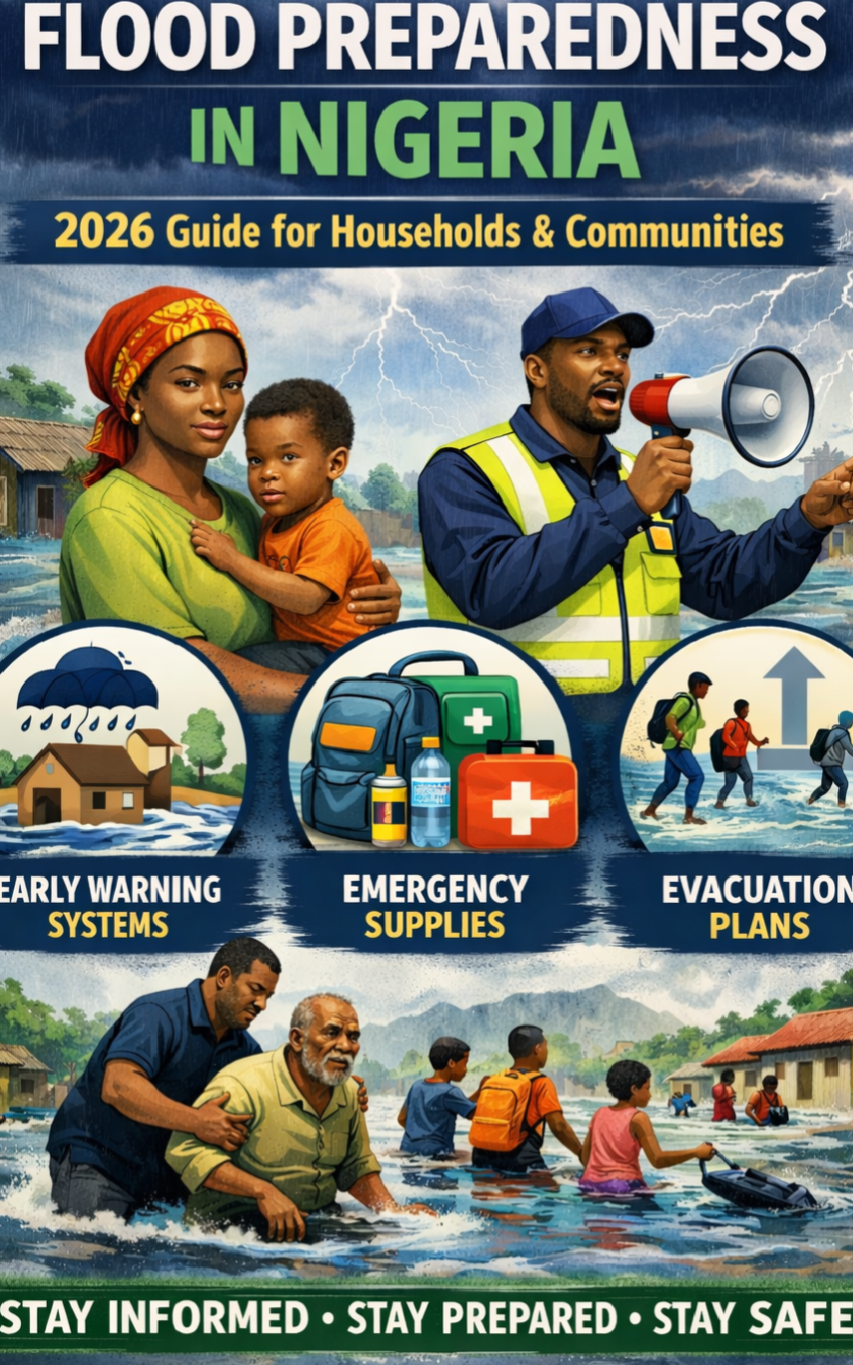
🧠 Quick Summary
Flooding in Nigeria has become an increasingly serious challenge due to climate change, poor urban planning, and seasonal heavy rainfall. In 2026, proactive flood preparedness is essential to save lives, protect property, and safeguard livelihoods across flood-prone states like Lagos, Bayelsa, Niger, Kogi, and Adamawa. âš ï¸ Why Flood Preparedness is CrucialFrequent Flood Events: Rivers overflowing and flash floods are becoming common.
Flooding in Nigeria has become an increasingly serious challenge due to climate change, poor urban planning, and seasonal heavy rainfall. In 2026, proactive flood preparedness is essential to save lives, protect property, and safeguard livelihoods across flood-prone states like Lagos, Bayelsa, Niger, Kogi, and Adamawa.
âš ï¸ Why Flood Preparedness is Crucial
Frequent Flood Events: Rivers overflowing and flash floods are becoming common.
High Human and Economic Cost: Thousands are displaced yearly, with millions of Naira lost in property damage.
Health Risks: Flooding increases waterborne diseases such as cholera and typhoid.
Climate Change: Extreme rainfall patterns are intensifying flood risks.
“Early preparation and community awareness significantly reduce the impact of floods.†– NEMA, Nigeria
ðŸ Household Flood Preparedness Checklist
1. Emergency Supplies
Store clean drinking water (3 liters/person/day for at least 3 days).
Keep non-perishable foods like canned goods and dry staples.
First aid kit, flashlights, batteries, portable radio, and essential medicines.
Secure important documents in waterproof containers.
2. Home Protection Measures
Elevate electrical outlets, appliances, and furniture above expected flood levels.
Use sandbags or temporary flood barriers around entrances.
Clear gutters, drains, and nearby waterways.
Seal cracks and openings to prevent water seepage.
3. Communication & Safety Planning
Subscribe to local weather alerts via NiMet or community channels.
Prepare a family evacuation plan with clear meeting points.
Maintain a list of emergency contacts (neighbors, NEMA, local authorities).
4. During Flooding
Avoid walking or driving through floodwaters.
Turn off electricity and gas if water levels rise.
Keep children and pets indoors and safe.
ðŸ˜ï¸ Community Flood Preparedness Checklist
1. Awareness & Education
Organize community flood awareness campaigns.
Share early warning information through radio, WhatsApp groups, and community leaders.
2. Drainage & Infrastructure Maintenance
Ensure drainage channels, culverts, and canals are free from debris.
Maintain retention basins, levees, and flood embankments.
Promote green spaces and permeable surfaces to reduce runoff.
3. Emergency Response
Identify community shelters and ensure they are flood-resilient.
Train volunteers in first aid and evacuation procedures.
Establish rapid communication networks for timely alerts.
4. Post-Flood Recovery
Coordinate clean-up and sanitation to prevent disease outbreaks.
Assist affected households with food, water, and temporary housing.
Keep records of damaged properties and displaced persons for relief planning.
🌟 Tips for Flood Preparedness in Nigeria 2026
Monitor local weather forecasts and river levels regularly.
Keep drains, gutters, and community channels clean.
Evacuate early if your area is prone to flooding.
Educate family and neighbors on flood hazards and safety protocols.
Consider flood insurance for property and crops.
🔹 Conclusion
Flood preparedness in Nigeria is a shared responsibility between households, communities, and government authorities. With proactive planning, early warning systems, and proper infrastructure maintenance, the human and economic toll of floods can be significantly reduced.
2026 is the year to take flood preparedness seriously—protect your family, your property, and your community.