Flood Preparedness in Nigeria: Household & Community Checklists for 2026
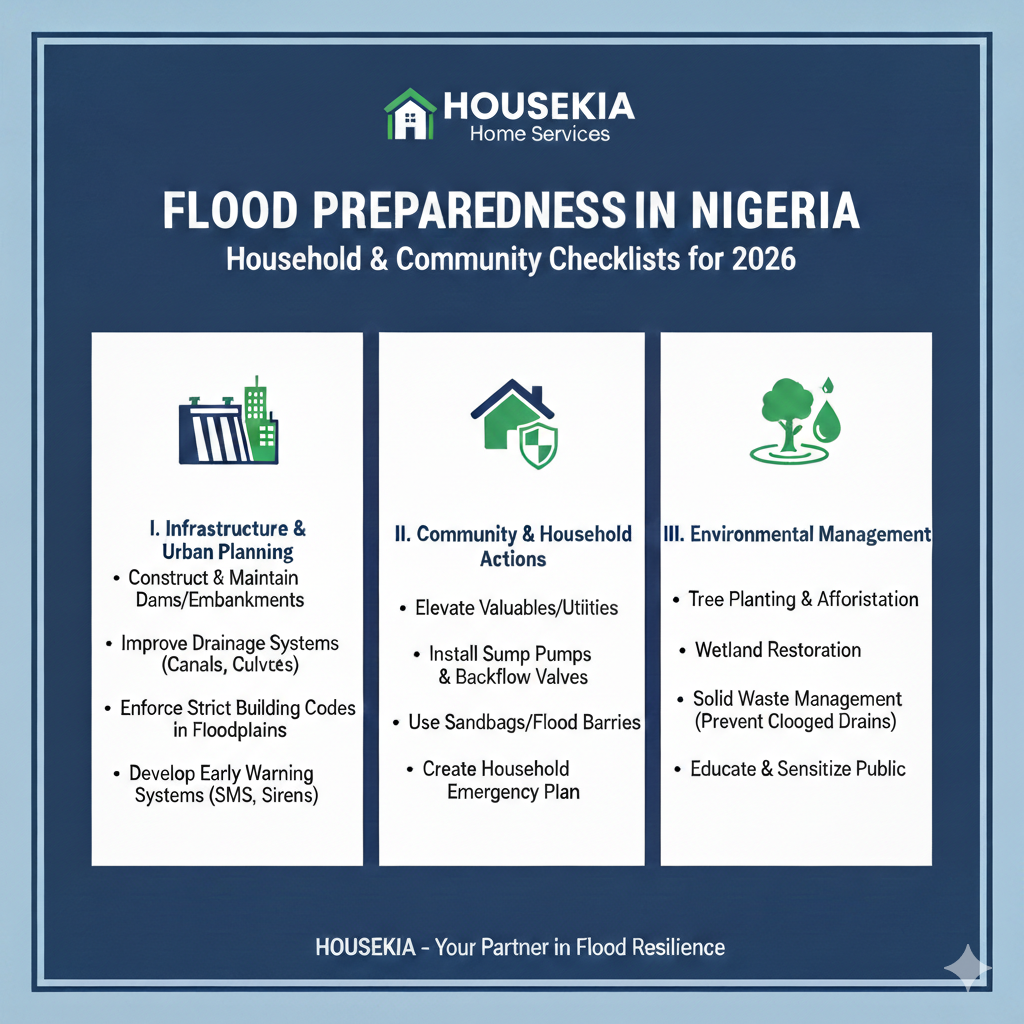
🧠 Quick Summary
Flooding in Nigeria has become a recurring threat due to climate change, heavy rainfall, and urbanization. Preparing early can save lives, property, and livelihoods. Whether you live in Lagos, Bayelsa, Niger, or Adamawa, these checklists will help your household and community stay safe during the rainy season.
Flooding in Nigeria has become a recurring threat due to climate change, heavy rainfall, and urbanization. Preparing early can save lives, property, and livelihoods. Whether you live in Lagos, Bayelsa, Niger, or Adamawa, these checklists will help your household and community stay safe during the rainy season.
ðŸŒ§ï¸ Why Flood Preparedness Matters
Nigeria loses billions annually to flood-related damage.
Displacement and health risks rise sharply during the rainy season.
Early action reduces risks and speeds up post-flood recovery.
✅ Household Flood Preparedness Checklist
1. Emergency Supplies
Stock clean drinking water (at least 3 liters per person per day for 3 days).
Store non-perishable food items (canned goods, dry foods).
Keep a first aid kit, flashlights, batteries, and a portable radio.
Include essential medicines and hygiene items.
2. Flood-Proof Your Home
Elevate electrical appliances and sockets above potential flood levels.
Install sandbags or flood barriers at doors and low points.
Ensure gutters and drainage around your home are clear.
Move important documents and valuables to a safe, high place.
3. Communication & Alerts
Subscribe to local flood alerts and weather warnings.
Keep emergency contacts (neighbors, local authorities, NEMA) handy.
Prepare a family evacuation plan including meeting points.
4. Safety Measures During Flood
Avoid walking or driving through floodwater.
Switch off electricity and gas if water levels rise.
Keep children and pets safe and indoors.
ðŸ˜ï¸ Community Flood Preparedness Checklist
1. Community Awareness
Organize flood awareness workshops for residents.
Disseminate early warning messages via community leaders, WhatsApp, or local radio.
2. Infrastructure & Drainage
Ensure drainage channels are clear of debris.
Maintain levees, canals, and retention basins in flood-prone zones.
Encourage permeable surfaces for better water absorption in open spaces.
3. Emergency Response Planning
Identify community shelters and ensure they are flood-resilient.
Train volunteer response teams for evacuation and first aid.
Establish communication networks for real-time reporting during floods.
4. Post-Flood Recovery Plan
Plan for clean-up and waste disposal to prevent disease outbreaks.
Coordinate food and water distribution to affected households.
Maintain a database of affected households for assistance tracking.
📊 5 Tips to Stay Flood-Safe in 2026
Monitor rainfall and river levels regularly.
Keep drains clean and unclog gutters in your neighborhood.
Evacuate early if your area is at risk.
Educate family and neighbors on flood hazards and safety protocols.
Invest in insurance where possible to protect your home and crops.
🔹 Conclusion
Flood preparedness is not just a household responsibility—it’s a community effort. Following these practical checklists can reduce flood-related damage, protect lives, and improve resilience across Nigeria.
By acting early, staying informed, and working together, families and communities can turn the rainy season from a disaster into a manageable challenge.