Flooding Menace in Nigeria: Prevention Strategies (2026 Guide)
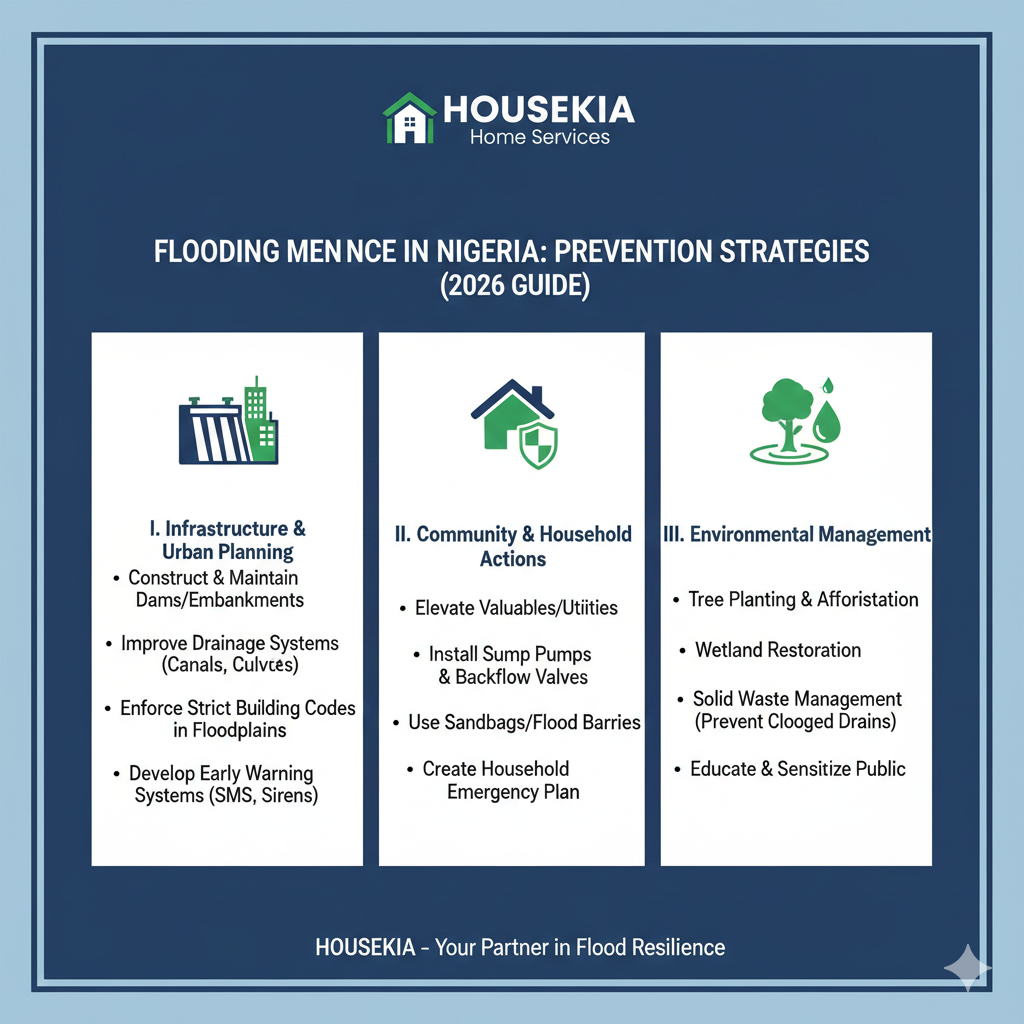
🧠 Quick Summary
Flooding has become a recurring national emergency in Nigeria, affecting millions of residents, destroying infrastructure, and disrupting economic activities. From urban flash floods in Lagos to large-scale river overflows along the River Niger and River Benue, the crisis continues to intensify each year. While heavy rainfall and climate change contribute to the problem, sustainable prevention strategies and a coordinated national action plan can significantly reduce flood risks.
Flooding has become a recurring national emergency in Nigeria, affecting millions of residents, destroying infrastructure, and disrupting economic activities. From urban flash floods in Lagos to large-scale river overflows along the River Niger and River Benue, the crisis continues to intensify each year.
While heavy rainfall and climate change contribute to the problem, sustainable prevention strategies and a coordinated national action plan can significantly reduce flood risks.
In this article, we outline practical flood prevention strategies in Nigeria and a structured action plan for government, developers, and communities.
Why Flooding in Nigeria Is Getting Worse
Several factors are driving the increasing flood crisis:
Rapid urbanization without proper planning
Blocked and inadequate drainage systems
Construction on floodplains
River overflow and dam releases
Deforestation and environmental degradation
Climate change and extreme weather events
Addressing flooding requires a multi-level response involving policy reform, infrastructure upgrades, and behavioral change.
✅ Flood Prevention Strategies in Nigeria
1ï¸âƒ£ Enforce Proper Urban Planning and Development Control
One of the most effective ways to prevent flooding is to stop construction in high-risk zones.
Key measures include:
Strict enforcement of building regulations
Prohibition of construction on waterways
Mandatory flood risk assessment before project approval
Implementation of city master plans
Without enforcement, unplanned developments will continue to worsen flooding.
2ï¸âƒ£ Upgrade and Maintain Drainage Infrastructure
Urban flooding is largely caused by poor drainage systems.
Recommended actions:
Expand and modernize stormwater drainage networks
Conduct routine desilting of gutters and canals
Replace undersized culverts
Introduce underground drainage systems in major cities
Regular maintenance is as important as construction.
3ï¸âƒ£ Improve River Basin and Dam Management
Seasonal flooding from major rivers like the River Niger and River Benue affects several states annually.
Strategic actions:
Continuous monitoring of river water levels
Coordinated dam water releases
Dredging high-risk river sections
Strengthening river embankments
Effective river management can significantly reduce downstream flood disasters.
4ï¸âƒ£ Promote Environmental Protection and Afforestation
Healthy ecosystems reduce flood intensity naturally.
Prevention strategies:
Large-scale tree planting programs
Protection of wetlands and natural drainage paths
Control of illegal sand filling and land reclamation
Strict environmental impact assessments
Vegetation helps absorb excess rainfall and slow runoff.
5ï¸âƒ£ Strengthen Waste Management Systems
Blocked drainage remains one of the most preventable causes of flooding in Nigeria.
Solutions include:
Enforcing penalties for dumping refuse in drains
Increasing waste collection services
Public sanitation campaigns
Community monitoring initiatives
Behavioral change is critical to long-term flood prevention.
6ï¸âƒ£ Climate Change Adaptation Measures
Climate change has intensified rainfall patterns across Nigeria.
Adaptation measures:
Develop flood-resilient infrastructure
Establish nationwide early warning systems
Improve flood forecasting technology
Encourage elevated building designs in flood-prone areas
Preparedness reduces casualties and property damage.