Bricks vs Blocks in Housing Projects in Nigeria: Pros and Cons
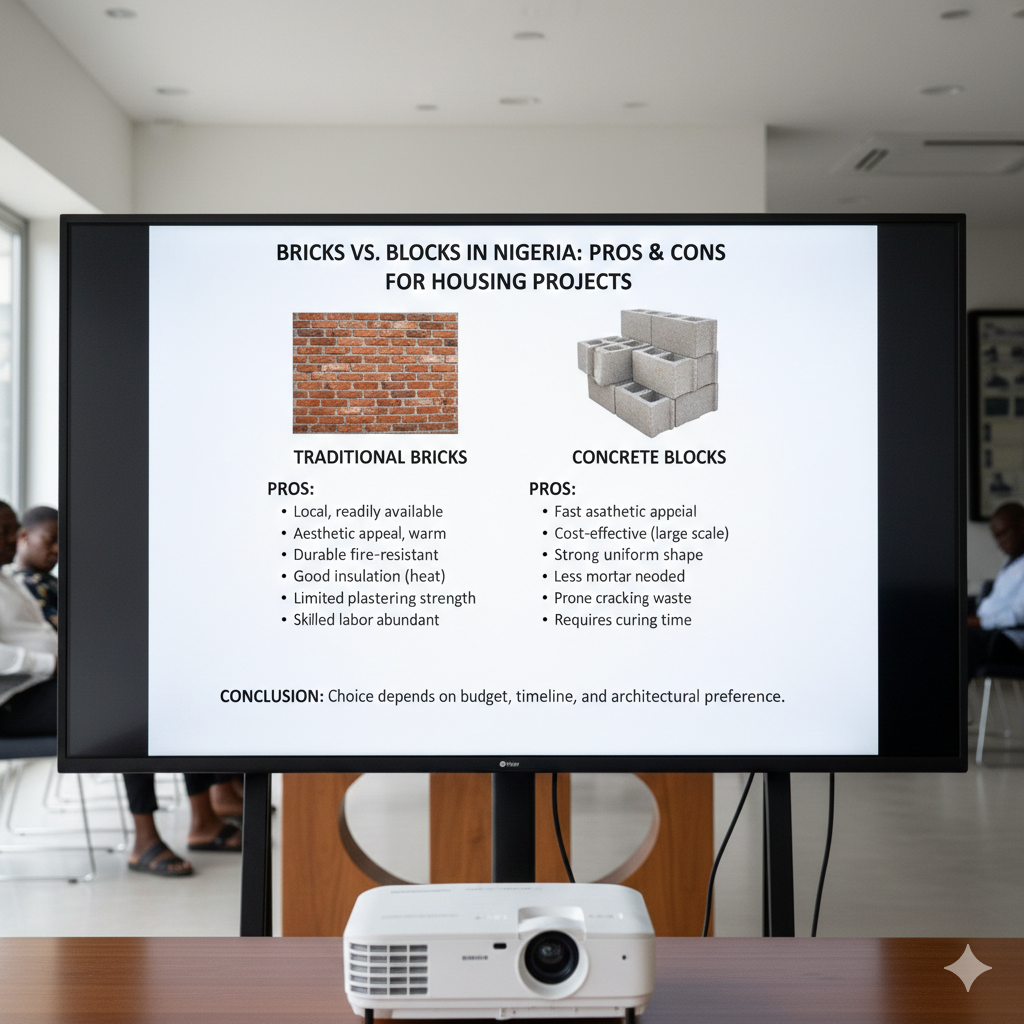
🧠 Quick Summary
Choosing between bricks and blocks is a major decision in housing construction. Both materials are widely used in Nigeria, but they differ in cost, strength, availability, and suitability for different project types. This article breaks down the advantages and disadvantages of bricks and blocks, helping homeowners, developers, and builders make informed choices.
Choosing between bricks and blocks is a major decision in housing construction. Both materials are widely used in Nigeria, but they differ in cost, strength, availability, and suitability for different project types.
This article breaks down the advantages and disadvantages of bricks and blocks, helping homeowners, developers, and builders make informed choices.
🧱 BRICKS
Bricks are usually made from clay, molded and fired in kilns. In Nigeria, they are less common than blocks but are gaining attention for specific housing styles.
✅ Pros of Using Bricks
1. Durability and Strength
Fired bricks are very strong and long-lasting
Resistant to weathering when properly made
2. Good Thermal Insulation
Bricks help regulate indoor temperature
Houses stay cooler during hot days and warmer at night
3. Aesthetic Appeal
Natural, classic appearance
Can be left exposed without plastering, reducing finishing costs
4. Low Maintenance
Less prone to cracking when well laid
Good resistance to fire and pests
⌠Cons of Using Bricks
1. Higher Cost in Nigeria
Brick production is limited and not widespread
Transportation and kiln firing increase cost
2. Limited Availability
Not easily available in many Nigerian states
Quality can vary greatly due to informal production
3. Slower Construction Speed
Smaller size means more units per square meter
Construction takes longer compared to blocks
4. Skill Requirement
Requires skilled bricklayers for proper alignment and strength
🧱 BLOCKS (Sandcrete Blocks)
Blocks are made from cement, sand, and water. They are the most common walling material in Nigeria.
✅ Pros of Using Blocks
1. Wide Availability
Produced almost everywhere in Nigeria
Easy to source locally, reducing transport costs
2. Lower Initial Cost
Generally cheaper than bricks
Suitable for mass housing and large-scale projects
3. Faster Construction
Larger size means fewer units and quicker walling
Ideal for tight project timelines
4. Familiarity
Most Nigerian masons are trained in blockwork
Easy to supervise and control on site
⌠Cons of Using Blocks
1. Quality Issues
Many blocks are under-cemented
Poor-quality blocks lead to cracks and structural weakness
2. Poor Thermal Performance
Blocks absorb heat easily
Buildings may feel hotter without insulation
3. Higher Maintenance Over Time
More prone to cracks and dampness
Often requires plastering and repainting
4. Environmental Impact
Cement production contributes significantly to carbon emissions
ðŸ Bricks vs Blocks: Quick Comparison
Feature
Bricks
Blocks
Availability
Limited
Very high
Cost
Higher
Lower
Construction Speed
Slower
Faster
Durability
High
Depends on quality
Heat Insulation
Better
Poorer
Skill Requirement
High
Moderate
Popularity in Nigeria
Low–Moderate
Very High
ðŸ—ï¸ Which Is Better for Housing Projects in Nigeria?
Use Bricks if:
You’re building luxury, eco-friendly, or architecturally distinct homes
Long-term durability and thermal comfort are priorities
You have access to quality bricks and skilled labor
Use Blocks if:
You’re developing mass housing or budget-conscious projects
Speed of construction is important
You can control block quality and cement ratios
📌 Final Thoughts
In Nigeria, blocks remain the dominant choice due to cost, availability, and speed. However, bricks offer superior durability, comfort, and aesthetics when properly sourced and constructed.
The best option depends on your budget, project scale, location, and long-term goals.