Lagos Annual Flooding Menace: Causes, Consequences & Practical Solutions (2026 Guide)
🧠 Quick Summary
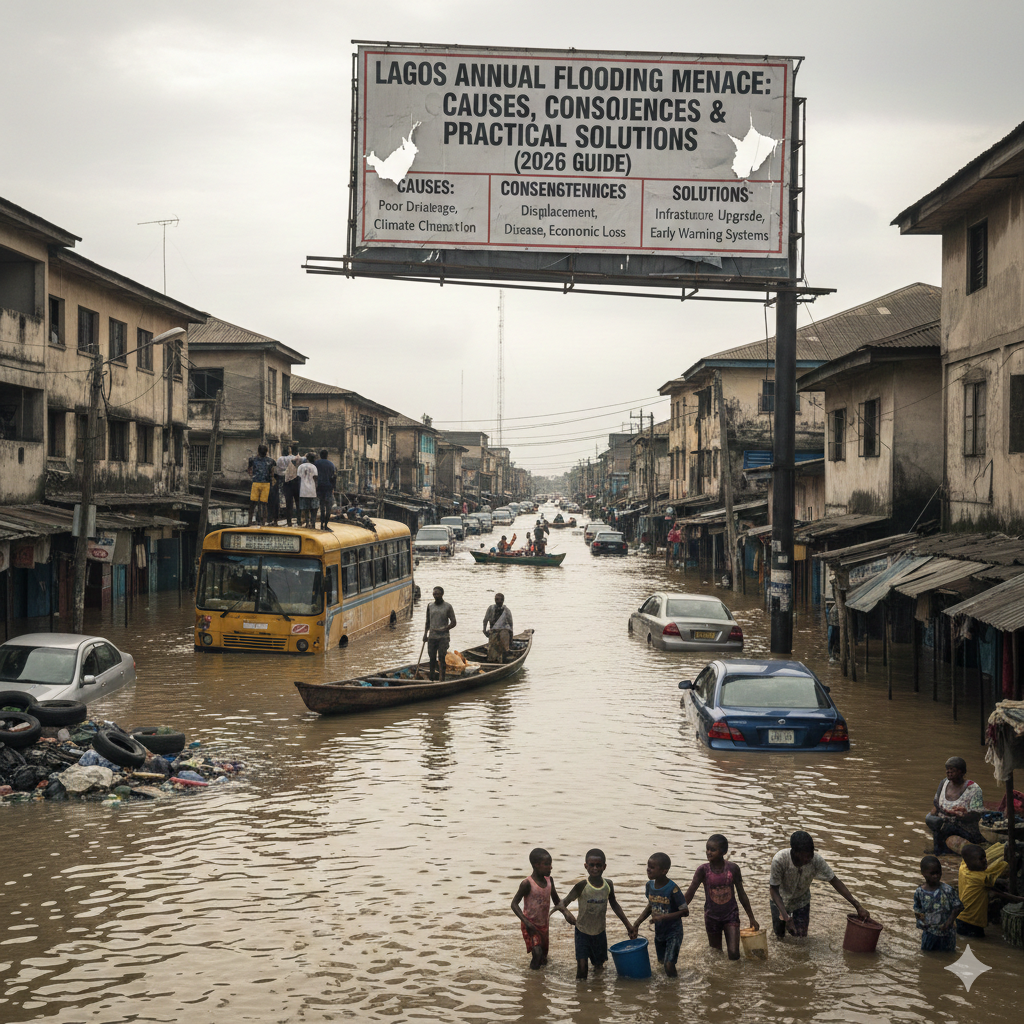
Flooding has become a yearly challenge in Lagos, disrupting homes, businesses, transportation, and real estate investments. As Nigeria’s commercial capital and one of Africa’s fastest-growing megacities, Lagos faces increasing environmental pressure from climate change, rapid urbanization, and infrastructure gaps. In this 2026 guide, we examine the major causes of Lagos flooding, its consequences, and actionable solutions for homeowners, developers, and policymakers.
Flooding has become a yearly challenge in Lagos, disrupting homes, businesses, transportation, and real estate investments. As Nigeria’s commercial capital and one of Africa’s fastest-growing megacities, Lagos faces increasing environmental pressure from climate change, rapid urbanization, and infrastructure gaps.
In this 2026 guide, we examine the major causes of Lagos flooding, its consequences, and actionable solutions for homeowners, developers, and policymakers.
Why Does Lagos Experience Annual Flooding?
1. Heavy Rainfall & Climate Variability
According to the Nigerian Meteorological Agency (NiMet), Lagos experiences high-intensity rainfall during the rainy season (April–October), especially between July and September.
Short, intense downpours often overwhelm drainage systems, resulting in flash floods within hours.
Additionally, climate change has increased:
Extreme rainfall events
Coastal storm surges
Sea level rise
2. Coastal & Low-Lying Geography
Lagos is bordered by the Atlantic Ocean and interconnected lagoons. Many parts of the city are barely above sea level, making them vulnerable to:
Ocean surge flooding
Tidal backflow
Rising groundwater levels
Low-lying communities and reclaimed lands are particularly at risk.
3. Poor Drainage Infrastructure
A major contributor to flooding is inadequate stormwater management:
Blocked gutters filled with plastic waste
Undersized drainage channels
Lack of proper drainage planning in new estates
Poor maintenance culture
When drains are clogged, rainwater accumulates quickly.
4. Unplanned Urbanization & Wetland Encroachment
Rapid population growth has led to:
Construction on natural floodplains
Development on wetlands
Illegal building along drainage setbacks
Urban planning regulations are often poorly enforced, worsening flood vulnerability.
5. Waste Management Challenges
Improper disposal of refuse into canals and gutters blocks water pathways. During rainfall, debris creates artificial dams that prevent free water flow.
Consequences of Lagos Annual Flooding
💰 Economic Losses
Flooding causes billions of naira in losses annually through:
Damage to homes and businesses
Destruction of goods and inventory
Reduced working hours due to traffic gridlock
ðŸ Property Damage
Repeated flooding weakens building integrity by causing:
Foundation cracks
Wall dampness and mold
Electrical system damage
Reduced property value
For real estate investors, this increases maintenance costs and lowers returns.
🚗 Traffic & Infrastructure Collapse
Flooded roads lead to:
Severe traffic congestion
Road surface deterioration
Vehicle breakdowns
Delayed emergency response
🦠Public Health Risks
Floodwater often mixes with sewage, increasing the risk of:
Malaria
Cholera
Typhoid
Skin infections
Stagnant water also becomes a breeding ground for mosquitoes.
📉 Reduced Investor Confidence
Frequent flooding can:
Discourage real estate investments
Increase insurance costs
Push property buyers toward safer zones
This shifts demand and increases housing prices in flood-free areas.
Long-Term Risks If Flooding Persists
If not addressed, Lagos could face:
Climate migration within the city
Higher construction costs due to flood-resistant designs
Environmental degradation and coastal erosion
Increased social inequality
Practical Solutions to the Lagos Flooding Crisis
Government-Level Solutions
Strict enforcement of urban planning laws
Continuous desilting of drainage channels
Expansion of stormwater infrastructure
Investment in flood retention basins and pumping stations
Improved waste management systems
Homeowner & Developer Solutions
For property owners and developers in Lagos:
✔ Conduct flood risk assessment before buying land
✔ Avoid building on wetlands and drainage paths
✔ Elevate foundations in flood-prone areas
✔ Install proper perimeter drainage systems
✔ Maintain regular gutter cleaning
Final Thoughts
The Lagos flooding menace is not purely a natural disaster — it is a combination of climate factors, rapid urbanization, infrastructure limitations, and human behavior.
Solving it requires:
Responsible governance
Sustainable urban planning
Community awareness
Smart real estate investment decisions
For homeowners, landlords, and developers, flood preparedness is no longer optional — it is essential.
🔵 Need Professional Guidance?
HOUSEKIA helps property owners:
Conduct flood risk assessments
Verify land before purchase
Ensure building compliance
Protect real estate investments
📞 Call/WhatsApp: +2348111222333
🌠Website: www.housekia.com�
📧 Email: enquiries@housekia.com