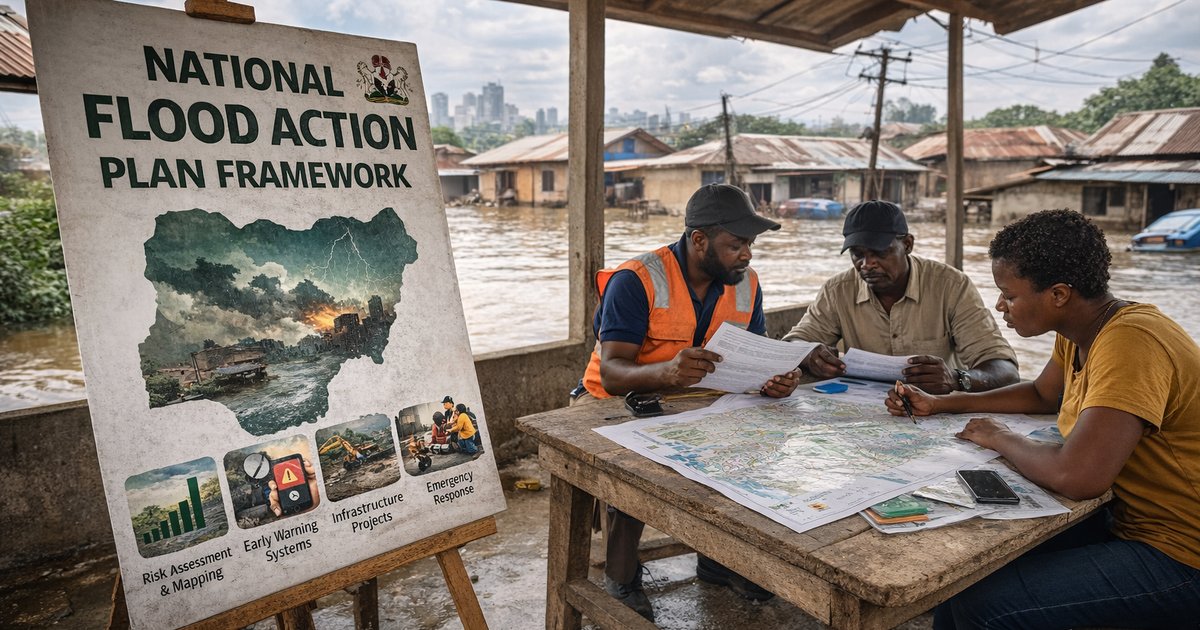
National Flood Action Plan Framework
🧠 Quick Summary
To effectively address flooding, Nigeria needs a structured implementation timeline. 🔴 Immediate Actions (0–12 Months)Emergency clearing of blocked drainage systemsIdentification and mapping of flood-prone zonesPublic awareness campaigns before rainy seasonStrengthening early warning systemsTemporary relocation plans for vulnerable communities🟡 Medium-Term Actions (1–3 Years)Expansion of drainage infrastructureStrong enforcement of development control lawsRiver embankment reinforcement projectsEstablishment of state-level flood response unitsDigitization of land and environmental records🟢 Long-Term Actions (3–10 Years)Development of flood-resilient smart citiesConstruction of retention basins and flood control damsRelocation of high-risk settlementsIntegration of flood risk into housing policyContinuous investment in climate adaptation infrastructureðŸ—ï¸ Role of Real Estate Developers and Property OwnersFlood prevention is not solely a government responsibility. Developers and property investors should:Conduct proper land due diligenceAvoid floodplains and waterway setbacksElevate building foundationsInstall effective stormwater systemsUse flood-resistant construction materialsFailing to assess flood risk can lead to massive financial losses.
To effectively address flooding, Nigeria needs a structured implementation timeline.
🔴 Immediate Actions (0–12 Months)
Emergency clearing of blocked drainage systems
Identification and mapping of flood-prone zones
Public awareness campaigns before rainy season
Strengthening early warning systems
Temporary relocation plans for vulnerable communities
🟡 Medium-Term Actions (1–3 Years)
Expansion of drainage infrastructure
Strong enforcement of development control laws
River embankment reinforcement projects
Establishment of state-level flood response units
Digitization of land and environmental records
🟢 Long-Term Actions (3–10 Years)
Development of flood-resilient smart cities
Construction of retention basins and flood control dams
Relocation of high-risk settlements
Integration of flood risk into housing policy
Continuous investment in climate adaptation infrastructure
ðŸ—ï¸ Role of Real Estate Developers and Property Owners
Flood prevention is not solely a government responsibility.
Developers and property investors should:
Conduct proper land due diligence
Avoid floodplains and waterway setbacks
Elevate building foundations
Install effective stormwater systems
Use flood-resistant construction materials
Failing to assess flood risk can lead to massive financial losses.
👥 Community-Based Flood Prevention
Communities play a critical role in reducing flood impact.
Residents should:
Avoid dumping refuse in drainage channels
Participate in sanitation exercises
Report blocked or damaged drainage systems
Plant trees and protect green spaces
Develop neighborhood emergency response plans
Flood prevention starts at the grassroots level.
💰 Economic and Policy Recommendations
To sustainably address flooding, Nigeria should:
Establish a National Flood Mitigation Fund
Encourage public-private partnerships (PPP)
Promote flood insurance adoption
Incentivize climate-smart construction
Investing in prevention is far cheaper than post-disaster recovery.
📌 Conclusion
Flooding in Nigeria is both an environmental and governance challenge. However, with strong political will, strategic infrastructure investment, environmental protection, and public cooperation, the impact can be drastically reduced.
A proactive prevention strategy — rather than reactive disaster response — is the only sustainable solution to Nigeria’s flooding crisis.