Current Trends in Diaspora Investments in Nigeria’s Housing Industry
🧠 Quick Summary
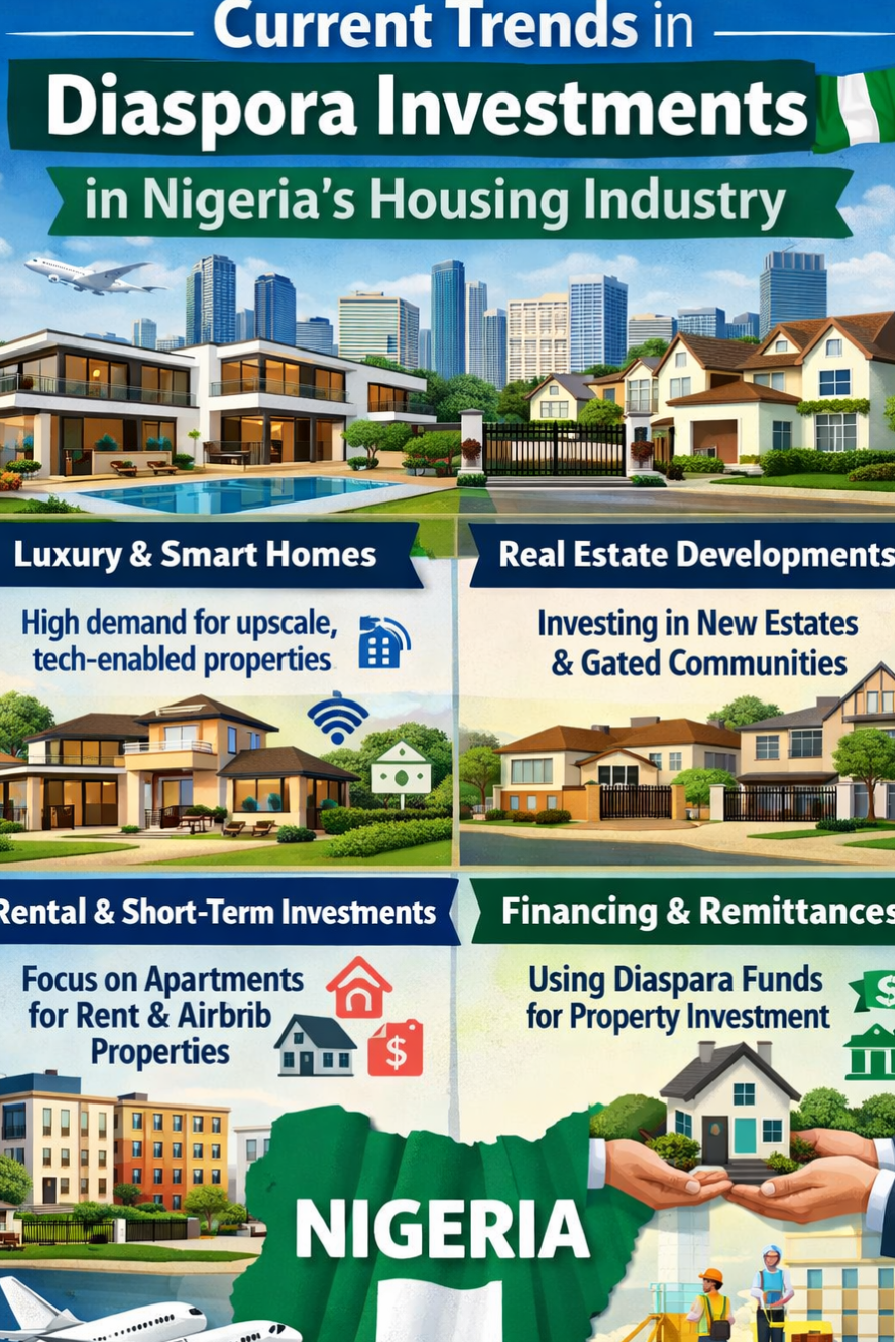
Nigeria’s real estate sector is experiencing a major shift — and diaspora investors are at the center of it. With billions of dollars flowing into the country annually through remittances, overseas Nigerians are increasingly channeling their funds into property acquisition, development, and rental investments. In this 2026 guide, we explore the latest trends in diaspora investments in Nigeria’s housing industry, what is driving the surge, where the money is going, and what it means for developers, homeowners, and policymakers.
Nigeria’s real estate sector is experiencing a major shift — and diaspora investors are at the center of it. With billions of dollars flowing into the country annually through remittances, overseas Nigerians are increasingly channeling their funds into property acquisition, development, and rental investments.
In this 2026 guide, we explore the latest trends in diaspora investments in Nigeria’s housing industry, what is driving the surge, where the money is going, and what it means for developers, homeowners, and policymakers.
📊 Diaspora Remittances: A Powerful Economic Driver
According to the World Bank, Nigeria remains one of Africa’s largest recipients of diaspora remittances, receiving over $20 billion annually in recent years. A significant portion of these funds goes directly into:
Residential home purchases
Self-build housing projects
Luxury apartment investments
Short-let and serviced apartment developments
Land banking in emerging cities
Real estate has become a preferred asset class for diaspora Nigerians seeking long-term security and wealth preservation.
🙠Key Investment Hotspots in Nigeria
Diaspora investors are not buying randomly — they are targeting strategic urban locations with strong appreciation potential and infrastructure growth.
🔹 Lagos State
The commercial capital, Lagos, remains the top destination. Premium areas attracting diaspora funds include:
Victoria Island
Ikoyi
Lekki
Ajah
Master-planned estates and waterfront developments are especially popular.
🔹 Abuja
Nigeria’s capital city, Abuja, continues to attract diaspora buyers in districts such as:
Maitama
Asokoro
Gwarinpa
Guzape
High-end detached homes and serviced apartments dominate this market.
🔹 Emerging Growth Cities
Beyond Lagos and Abuja, diaspora investors are increasingly exploring:
Ibadan
Enugu
Uyo
Abeokuta
These cities offer lower entry costs and strong medium-to-long-term appreciation potential.
💡 Why Diaspora Nigerians Are Investing in Property
1ï¸âƒ£ Wealth Preservation Against Naira Volatility
Foreign currency earnings (USD, GBP, EUR, CAD) give diaspora investors significant purchasing power. Investing in Nigerian property allows them to hedge against inflation and currency depreciation.
2ï¸âƒ£ Retirement & Legacy Planning
Many diaspora Nigerians plan to retire back home. Owning property secures accommodation and builds generational wealth for families.
3ï¸âƒ£ Rental Income & Short-Let Opportunities
The growth of short-term rentals, corporate housing, and Airbnb-style apartments has made income-generating properties highly attractive.
4ï¸âƒ£ Emotional & Cultural Connection
Beyond financial returns, owning property in Nigeria reinforces identity, belonging, and family ties.
🗠Shift Toward Premium & Smart Developments
A major trend in 2025–2026 is the preference for:
Gated communities
Smart homes with automation features
Estates with 24/7 power and security
Developments with drainage and flood-resilient infrastructure
Diaspora buyers are more quality-sensitive and demand:
Verified land titles
Transparent documentation
Professional project management
Structured payment plans
This has pushed developers to improve standards across the housing industry.
💻 PropTech & Digital Transactions Are Rising
Technology is reshaping diaspora investments. Remote buyers now rely on:
Virtual property tours
Drone site inspections
Online documentation
Digital land registry verification
Escrow payment systems
Several state governments, particularly in Lagos State, are digitizing land records to reduce fraud and speed up transactions.
âš– Key Challenges Affecting Diaspora Investors
Despite the growth, risks still exist:
Property scams and fraudulent agents
Title disputes and land litigation
Delays in documentation processing
High construction costs due to inflation
Trust remains the single biggest concern for diaspora buyers. As a result, verified developers and structured real estate firms are gaining more market share.
📈 Market Impact on Nigeria’s Housing Sector
Diaspora investments are:
Driving luxury and mid-income housing development
Increasing construction activity
Improving real estate transparency
Expanding mortgage and structured financing models
However, increased demand in premium areas has also contributed to rising property prices in certain locations.
🔮 Outlook for 2026 and Beyond
The future of diaspora investment in Nigeria’s housing industry looks strong due to:
Continued global Nigerian migration
Stable remittance inflows
Growing digital property platforms
Rising demand for quality housing
If government policies continue improving land governance and investor protection, diaspora capital could significantly help reduce Nigeria’s housing deficit.
✅ Final Thoughts
Diaspora investments are no longer occasional — they are now a major pillar of Nigeria’s housing industry growth. From luxury apartments in Lagos to emerging estates in secondary cities, overseas Nigerians are reshaping the property landscape.
For developers, the opportunity lies in transparency, quality delivery, and technology-driven engagement.
For investors, due diligence and verified partnerships remain critical.
As Nigeria’s real estate market evolves in 2026, diaspora capital will continue to play a defining role in shaping its future.