Designing Your Home in Nigeria: 10 Important Things to Consider (2026 Guide)
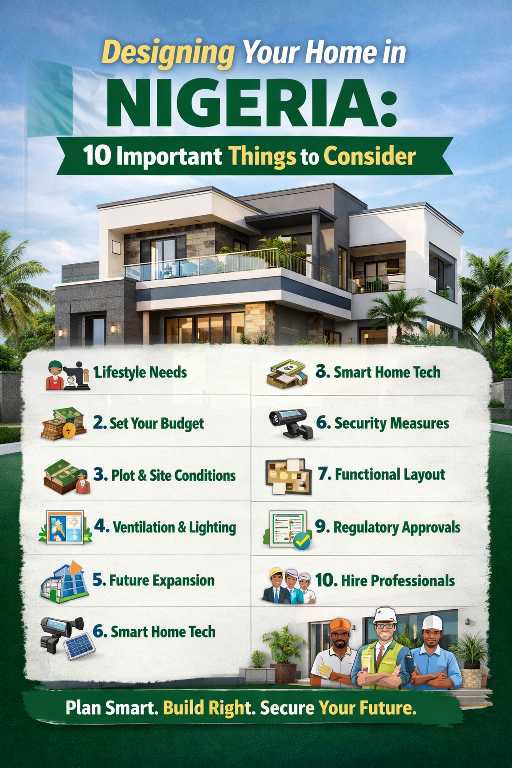
🧠 Quick Summary
Designing your home is one of the most important investments you will ever make. Whether you are building in Lagos, Abuja, Port Harcourt, or anywhere in Nigeria, proper planning can save you millions of naira and prevent costly structural mistakes. In this 2026 guide, we highlight the key things to consider when designing your home in Nigeria to ensure functionality, compliance, comfort, and long-term value.
Designing your home is one of the most important investments you will ever make. Whether you are building in Lagos, Abuja, Port Harcourt, or anywhere in Nigeria, proper planning can save you millions of naira and prevent costly structural mistakes.
In this 2026 guide, we highlight the key things to consider when designing your home in Nigeria to ensure functionality, compliance, comfort, and long-term value.
1. Define Your Lifestyle Needs First
Before speaking with an architect, clarify your needs:
How many bedrooms do you need today and in the future?
Do you work remotely?
Will you need a home office?
Do you entertain guests often?
Do you need a boys’ quarters (BQ)?
Are you planning for rental income or future expansion?
Your design must reflect your lifestyle — not just trends.
2. Set a Realistic Budget
Your architectural design must align with your financial capacity.
Consider:
Cost per square meter
Foundation type (based on soil test)
Finishing quality (basic, standard, luxury)
Professional fees
Government approval fees
Contingency funds (at least 10%)
Complex designs increase structural and finishing costs. A simpler, smarter design often performs better long term.
3. Understand Your Plot Size & Site Conditions
Your land determines your design possibilities.
Key factors include:
Soil condition (conduct a soil test)
Drainage pattern
Flood risk
Setback requirements
Orientation to sunlight and wind
If your land is located in coastal areas of Lagos such as Lekki or Ajah, elevation and proper foundation design are critical due to flooding risks.
4. Ensure Proper Ventilation & Natural Lighting
Nigeria’s tropical climate demands smart climate-responsive design.
Prioritize:
Cross ventilation
Large, well-positioned windows
Balcony shading
Heat-resistant roofing materials
Ceiling height optimization
This reduces:
Electricity bills
Air conditioning usage
Generator dependency
A well-ventilated home is more comfortable and energy-efficient.
5. Plan for Future Expansion
Many homeowners regret not planning for future growth.
Consider:
Designing the foundation to carry additional floors
Leaving space for a BQ
Structural allowance for vertical extension
Flexible layout designs
Future-proofing increases long-term property value.
6. Integrate Smart Home Technology
Modern homes in Nigeria are evolving.
Consider integrating:
CCTV systems
Solar power solutions
Inverter systems
Smart locks
Automated lighting
Video intercom systems
Smart homes improve security, convenience, and resale value.
7. Prioritize Security From Day One
Security should be part of architectural planning.
Include:
Perimeter fencing
Security lighting
Gatehouse design
Controlled access points
Estate layout planning
Retrofitting security later often costs more.
8. Optimize Functional Layout
Avoid common layout mistakes:
Small kitchens
Poor wardrobe space
Excessive corridors
No storage room
Bad staircase placement
Inadequate parking
Good space planning increases comfort without increasing construction costs.
9. Ensure Regulatory Compliance
Building without proper approval can lead to serious consequences.
In Lagos, developers must comply with regulations from the Lagos State Building Control Agency (LASBCA).
Required documents typically include:
Approved architectural drawings
Structural drawings
Mechanical & electrical drawings
Survey plan
Soil test report
Non-compliance can result in:
Stop-work orders
Heavy fines
Demolition
Always build legally and safely.
10. Hire Qualified Professionals
Never cut corners on professional expertise.
You need:
Architect
Structural Engineer
Quantity Surveyor
Land Surveyor
Builder/Project Manager
Professional guidance prevents costly structural failures and legal issues.
Common Mistakes to Avoid When Designing Your Home
Designing beyond your budget
Ignoring flood risk
Poor drainage planning
No provision for parking
Underestimating finishing costs
Skipping professional supervision
Final Thoughts: Design Smart, Build Right
Designing your home is not just about aesthetics — it’s about sustainability, compliance, functionality, and future value.
A well-designed home:
Saves energy
Reduces maintenance costs
Increases resale value
Protects your investment
Provides long-term comfort
Whether you are a first-time homeowner or an investor, proper design planning is the foundation of a successful building project in Nigeria.