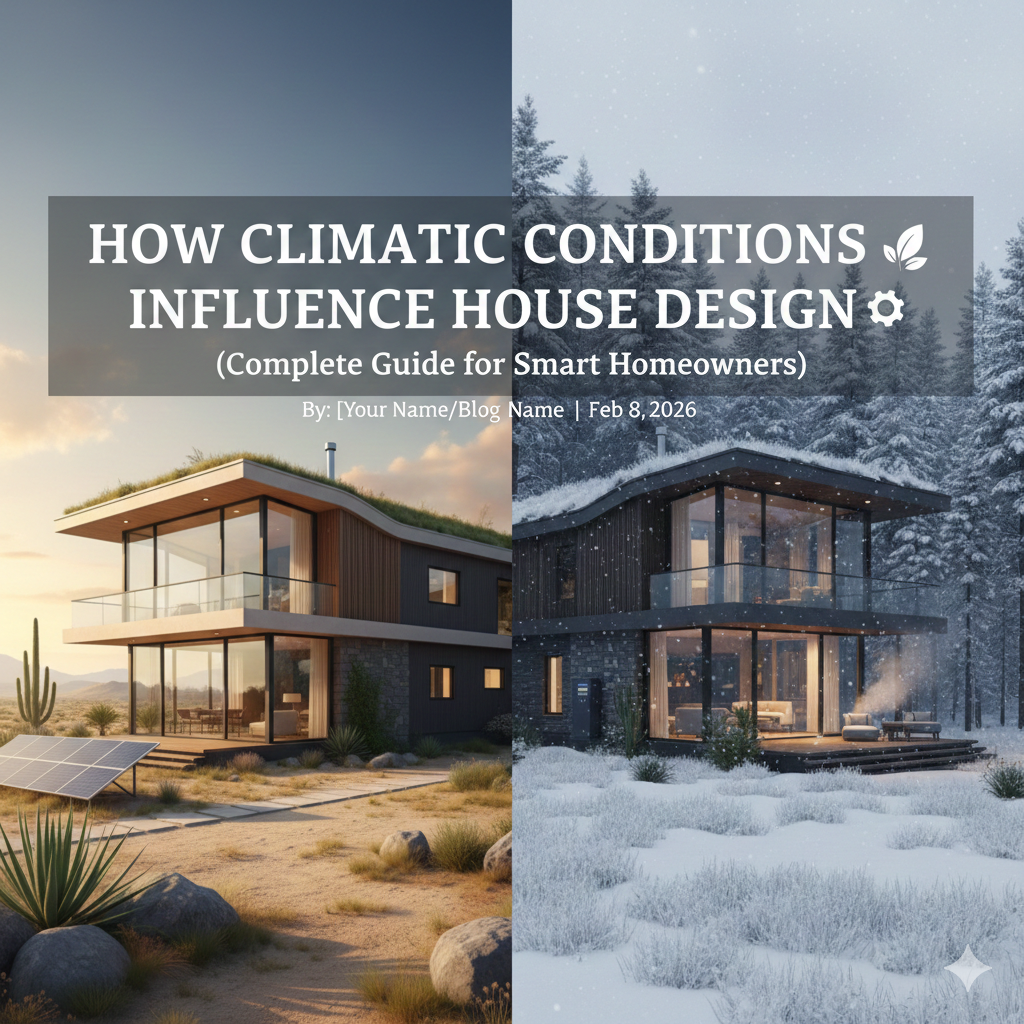
How Climatic Conditions Influence House Design (Complete Guide for Smart Homeowners)
🧠 Quick Summary
When building or buying a house, many people focus on beauty, size, or cost — but climate is one of the most important factors that determines how comfortable, durable, and energy-efficient your home will be. A house that ignores the local weather will suffer from excessive heat, flooding, cracks, dampness, and high electricity bills. Smart homes are not just beautiful — they are climate-responsive.
When building or buying a house, many people focus on beauty, size, or cost — but climate is one of the most important factors that determines how comfortable, durable, and energy-efficient your home will be.
A house that ignores the local weather will suffer from excessive heat, flooding, cracks, dampness, and high electricity bills.
Smart homes are not just beautiful — they are climate-responsive.
In this guide, you’ll learn how temperature, rainfall, wind, sunlight, and humidity influence house design, especially for tropical regions like Nigeria.
✅ Why Climate Matters in Building Design
Climatic conditions affect:
Indoor comfort
Energy consumption
Building durability
Maintenance costs
Health and ventilation
Property value
Designing with climate in mind helps you save money and avoid future repairs.
🌞 1. Temperature (Hot or Cold Weather)
🔥 Designing for Hot Climates (Tropical Regions like Nigeria)
Hot weather can make homes uncomfortable and increase cooling costs.
Smart design solutions:
Large windows for cross-ventilation
High ceilings to release hot air
Wide roof overhangs for shading
Verandas and balconies
Courtyards for airflow
Light-colored roofs and walls to reflect heat
Reduced west-facing windows
Benefits:
✅ Cooler indoor temperature
✅ Less dependence on AC
✅ Lower electricity bills
â„ï¸ Designing for Cold Climates
Cold regions require heat retention.
Smart design solutions:
Thick insulated walls
Smaller windows
Double glazing
Compact building shape
South-facing windows for sunlight
Lower ceilings
Benefits:
✅ Warmer interiors
✅ Lower heating costs
ðŸŒ§ï¸ 2. Rainfall and Roof Design
In areas with heavy rainfall, poor drainage can cause flooding, leaks, and structural damage.
Smart design solutions:
Steep roof slopes
Long-span aluminum sheets or tiles
Wide gutters and large downpipes
Elevated foundations
Proper site drainage systems
Soakaways and stormwater channels
Benefits:
✅ Prevents leaks
✅ Protects foundation
✅ Reduces dampness
💨 3. Wind Direction and Ventilation
Wind is a natural cooling system when properly utilized.
Smart design solutions:
Position windows toward prevailing winds
Cross-ventilation layout
Avoid large openings on storm-facing sides
Strong roof anchoring
Plant trees as windbreaks
Benefits:
✅ Natural cooling
✅ Reduced energy use
✅ Stronger structural stability
ðŸŒ¤ï¸ 4. Sunlight and Building Orientation
Sun movement affects indoor heat and lighting quality.
Smart design solutions:
East/West shading
North/South orientation for balanced daylight
Louvers and sunshades
Skylights
Covered terraces
Benefits:
✅ Natural lighting
✅ Reduced electricity bills
✅ Better comfort
ðŸŒ«ï¸ 5. Humidity Control
High humidity causes mold, peeling paint, and unhealthy indoor air.
Smart design solutions:
Proper cross ventilation
Damp-proof course (DPC)
Raised floors
Breathable wall finishes
Anti-mold paint
Adequate spacing between buildings
Benefits:
✅ Healthier home
✅ Longer building lifespan
✅ Less maintenance
ðŸ—ï¸ 6. Soil and Flood Risk
Climate influences soil expansion and flooding.
Smart design solutions:
Deep, strong foundations
Elevated floor levels
Good landscaping
Retaining walls
Proper site grading
Benefits:
✅ Structural safety
✅ Protection against erosion
✅ Reduced repair costs
ðŸ Best House Design for Nigeria’s Climate
Nigeria experiences heat, heavy rain, and humidity, so ideal homes should include:
✔ Cross ventilation
✔ High ceilings
✔ Wide eaves
✔ Steep roofing
✔ Light-colored roofing sheets
✔ Raised foundation
✔ Good drainage
✔ Verandas/balconies
🚫 What Happens When You Ignore Climate?
Poorly designed homes often face:
⌠Overheating
⌠High electricity bills
⌠Roof leaks
⌠Mold growth
⌠Cracks and damp walls
⌠Frequent repairs
🎯 Final Thoughts
A well-designed home works with nature, not against it.
Before building or buying property, always consult:
Architects
Structural engineers
Builders
Environmental planners
Climate-smart homes are more comfortable, durable, and cost-effective in the long run.
🔑 Key Takeaway
Climate-responsive design is not a luxury — it’s a necessity for safe and sustainable housing.