Rent to Own in Nigeria : How It Works, Benefits, Risks & Best Options
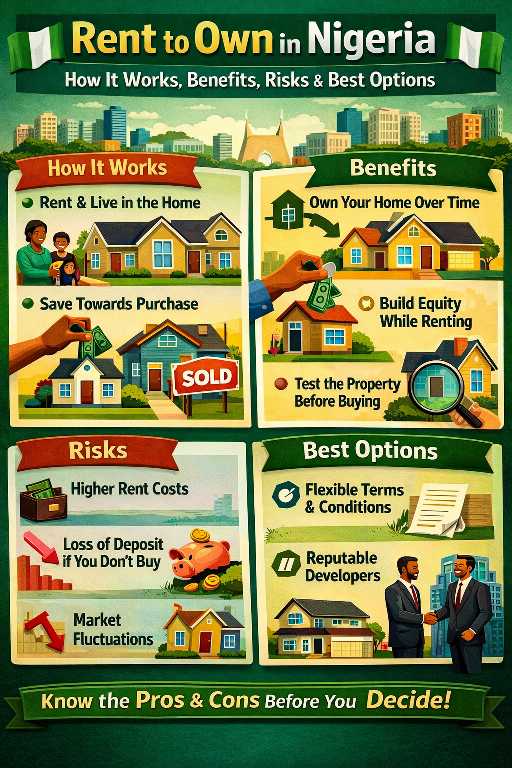
🧠 Quick Summary
Nigeria’s housing deficit and high upfront property costs have made rent to own one of the fastest-growing property financing models in the country. If you want to become a homeowner without paying the full purchase price at once, this guide explains how rent-to-own works in Nigeria, the available schemes, benefits, risks, and how to qualify. What Is Rent to Own in Nigeria.
Nigeria’s housing deficit and high upfront property costs have made rent to own one of the fastest-growing property financing models in the country. If you want to become a homeowner without paying the full purchase price at once, this guide explains how rent-to-own works in Nigeria, the available schemes, benefits, risks, and how to qualify.
What Is Rent to Own in Nigeria?
Rent to own (also called lease-to-own or hire purchase) is a property financing arrangement where you:
Move into a home as a tenant
Pay agreed monthly or annual instalments
Have part of your payments credited toward ownership
Become the legal owner after completing the payment term
Unlike traditional mortgages that require heavy documentation and large equity contributions, rent-to-own models are often more flexible.
Why Rent to Own Is Growing in Nigeria
Nigeria has an estimated housing deficit of over 20 million units. High inflation, rising construction costs, and strict mortgage requirements have made homeownership difficult.
Rent-to-own bridges this gap by:
Reducing upfront financial pressure
Allowing gradual payment
Providing immediate occupancy
Supporting middle-income earners
Government agencies and private developers are now offering structured schemes to encourage participation.
Government Rent-to-Own Schemes in Nigeria
Federal Mortgage Bank of Nigeria (FMBN) Rent-to-Own Scheme
The FMBN introduced a national Rent-to-Own housing program targeted at National Housing Fund (NHF) contributors.
Key Features:
No large lump sum required
Monthly payments spread across up to 30 years
Immediate possession of the home
Ownership transfers after full repayment
This scheme is particularly suitable for civil servants and formally employed Nigerians contributing to NHF.
State-Level Rent-to-Own Programs
Lagos State Government – Lagos HOMS
The Lagos Home Ownership Mortgage Scheme (Lagos HOMS) provides structured access to homes through instalment payments.
Features:
10%–30% initial deposit
Flexible repayment plan
Targeted at Lagos residents
Availability depends on project locations and eligibility criteria.
Private Developer Rent-to-Own in Nigeria
Several developers now offer rent-to-own plans in Lagos, Abuja, Ogun, and other urban centers.
How Private Rent-to-Own Typically Works:
5%–20% equity payment
2–5 years instalment period
Rent payments credited toward purchase
Balance settlement at agreed milestone
These plans are popular for estates in Ibeju-Lekki, Epe, Abuja suburbs, and emerging corridors.
Benefits of Rent to Own in Nigeria
1. Immediate Occupancy
You can move into the property while paying gradually.
2. Lower Entry Barrier
No need for full purchase amount upfront.
3. Flexible Payment Structure
Installments can be monthly, quarterly, or annually.
4. Hedge Against Inflation
Property value may appreciate while you’re still paying.
Risks & Challenges of Rent to Own in Nigeria
While attractive, rent-to-own also carries risks:
âš ï¸ 1. Default Risk
Missing payments may lead to eviction or loss of previous contributions.
âš ï¸ 2. Documentation Issues
Improper title documentation (C of O, Governor’s Consent, Deed of Assignment) can complicate ownership transfer.
âš ï¸ 3. Limited Legal Protection
Nigeria’s foreclosure and tenancy enforcement systems are still evolving.
âš ï¸ 4. Higher Overall Cost
Total payment over time may exceed outright purchase price.
Rent to Own vs Mortgage in Nigeria
Feature
Rent to Own
Traditional Mortgage
Upfront Cost
Low
Moderate–High
Bank Involvement
Sometimes
Always
Occupancy
Immediate
After loan approval
Flexibility
High
Moderate
Risk of Default
Medium
High (bank repossession)
Who Should Consider Rent to Own?
Rent-to-own may be ideal for:
Young professionals
Diaspora investors returning home
First-time home buyers
NHF contributors
Individuals without access to large capital
How to Safely Enter a Rent-to-Own Agreement in Nigeria
Before signing any agreement:
✅ Verify the developer’s track record
✅ Confirm land title and approvals
✅ Ensure payment terms are clearly documented
✅ Understand default clauses
✅ Consult a property lawyer
Frequently Asked Questions (FAQs)
Is rent-to-own legal in Nigeria?
Yes. It is structured as a lease agreement with purchase option or hire purchase contract.
Can I lose my money if I default?
Yes, depending on contract terms. Some agreements allow partial refund; others do not.
Do I need NHF to qualify?
Only for government schemes like FMBN. Private developers may not require NHF.
Final Thoughts
Rent-to-own in Nigeria is becoming a practical path to homeownership in 2026. Whether through the Federal Mortgage Bank of Nigeria, Lagos HOMS, or private estate developers, this model offers flexibility in a challenging economic climate.
However, due diligence is critical. Always review documentation, understand payment obligations, and work with credible professionals.