Why Are Properties Being Demolished in Abuja?
🧠 Quick Summary
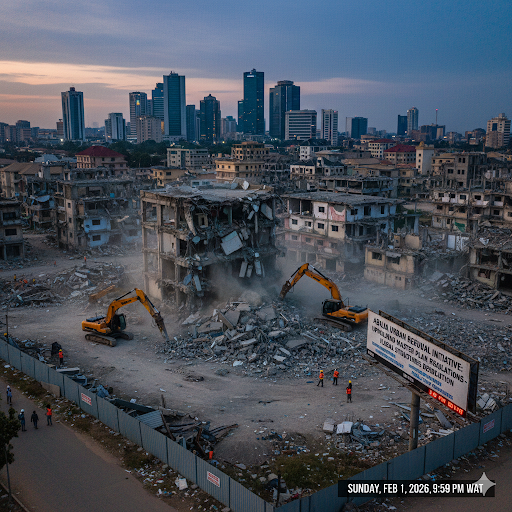
In recent years, property demolitions in Abuja have become a growing concern for homeowners, developers, and real estate investors. From duplexes in developing estates to entire residential clusters, several buildings have been marked and pulled down by the Federal Capital Territory Administration (FCTA). For many people, the big question remains:“Why are these demolitions happening.
In recent years, property demolitions in Abuja have become a growing concern for homeowners, developers, and real estate investors. From duplexes in developing estates to entire residential clusters, several buildings have been marked and pulled down by the Federal Capital Territory Administration (FCTA).
For many people, the big question remains:
“Why are these demolitions happening?”
If you’re planning to buy land or build in Abuja, understanding the reasons behind these enforcement actions can help you avoid costly mistakes and protect your investment.
Here’s what you need to know.
1. Enforcement of the Abuja Master Plan
The primary reason for most demolitions is the strict enforcement of Abuja’s Master Plan.
Abuja was designed as a carefully planned city with:
Residential zones
Commercial districts
Green areas
Road corridors
Utility and infrastructure routes
Any structure that violates these designated uses — even if already built — risks demolition.
Properties commonly affected include those:
Built on green or recreational areas
Encroaching on road expansions
Sitting on waterways or drainage paths
Located within public infrastructure corridors
The FCTA maintains that enforcing the Master Plan is necessary to prevent congestion, flooding, and urban chaos.
2. Building Without Proper Approvals
Another major cause is construction without statutory approvals.
Before building in Abuja, developers must obtain:
Land allocation or title documents
Building plan approval
Development permits
Compliance inspections
Unfortunately, some property owners:
Skip approvals to save time or money
Ignore stop-work notices
Build beyond approved specifications
Such structures are often labeled illegal developments and may be demolished without compensation.
3. Safety Violations and High-Risk Locations
Safety concerns also play a significant role.
Authorities regularly remove buildings located:
Under high-tension power lines
On pipeline routes
Within flood plains
On erosion-prone land
These areas pose serious risks to occupants. Even legally acquired land can be affected if it conflicts with public safety regulations.
4. Government’s Renewed Enforcement Drive
Recent administrations in the FCT have intensified compliance efforts.
Officials have stated that:
Illegal structures will not be tolerated
Previous lax enforcement created widespread violations
Demolitions are necessary to restore order
This stronger enforcement approach explains the increase in demolition activities across satellite towns and city extensions.
5. Land Disputes and Documentation Problems
In some cases, demolitions stem from title irregularities or disputed ownership.
Issues include:
Double allocations
Forged documents
Unregistered transactions
Buying from land grabbers (“omo onile” equivalents)
Failure to verify records with AGIS
When ownership cannot be legally validated, properties may be sealed or demolished.
6. Weak Planning and Informal Developments
Experts also blame:
Poor regulatory oversight
Informal settlements
Rapid urban expansion
Developers bypassing planning controls
These factors create unplanned neighborhoods that later face government enforcement.
What This Means for Property Buyers and Developers
If you’re investing in Abuja real estate, demolitions highlight one key lesson:
Due diligence is non-negotiable.
Before buying or building, always:
✅ Verify land records with AGIS
✅ Confirm the land use classification
✅ Obtain building plan approvals
✅ Check for government acquisition or infrastructure corridors
✅ Avoid “too cheap to be true” offers
✅ Work with registered professionals
Final Thoughts
While demolitions may seem harsh, the FCTA argues they are necessary to maintain Abuja’s original vision as a modern, well-planned capital city.
For investors and homeowners, the best protection is proper documentation, regulatory compliance, and professional guidance.
In Abuja real estate, it’s not just about owning land — it’s about owning land legally and safely.